
Can Turnitin Detect ChatGPT Content?
- AI Detection in Modern Classrooms
- Why Scores Are Not Absolute Proof
- The Effect of Editing on Detection Scores
- Supported Languages & System Limits
- How to Handle High Similarity Scores
- FAQ
Did you know that Turnitin claims to identify AI-generated text with over 98 % accuracy?
While this sounds like a strong argument against automated writing, the reality of how detectors work is far more complex than a simple "yes" or "no" answer. You should understand that these tools look for repetitive language patterns rather than specific digital fingerprints/watermarks (at least as of July 2026 - but the EU is cooking something up).
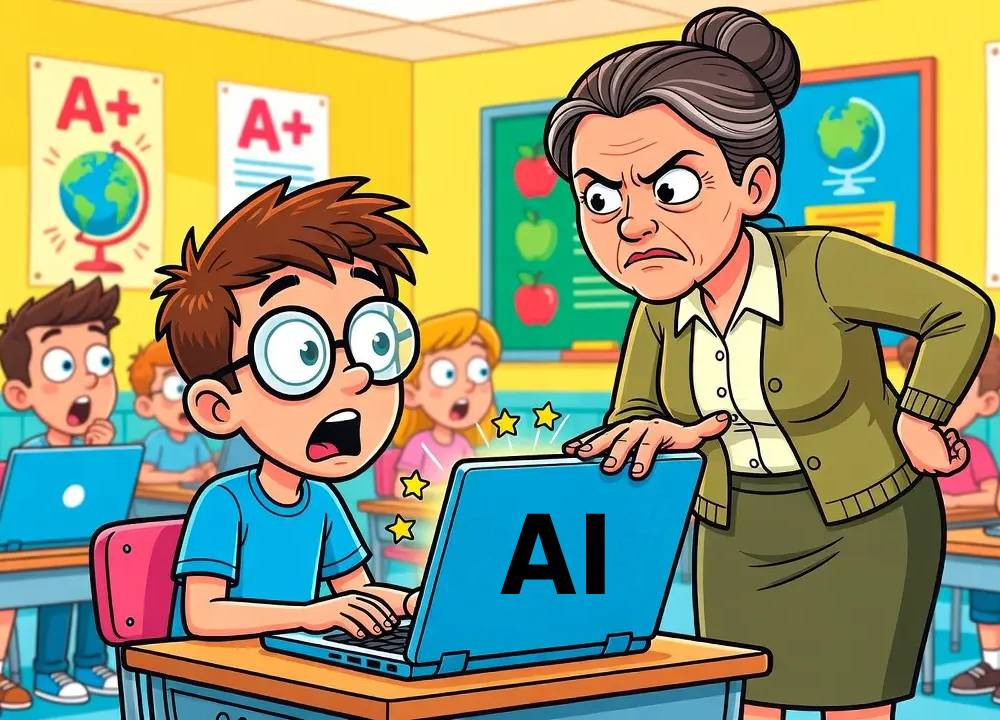
Turnitin currently uses a specialized detector designed to flag writing that looks likely to come from Large Language Models like ChatGPT/Claude/Gemini - this system is integrated directly into the similarity report that teachers review. When you submit a document, the software analyzes the structure, word choice and flow to see if it matches the predictable nature of machine generated prose.
AI Detection in Modern Classrooms
Turnitin is capable of flagging text that mirrors the output of ChatGPT. AI tools often choose the most statistically probable next word, which creates a specific rhythm that Turnitin's algorithms are trained to recognize. If your writing is too consistent or lacks the quirks of human thought, the system highlights it.
This detection tool is different from the traditional plagiarism check. While the old system looked for matches in a database of existing essays and websites, the AI detector looks for "AI-style" writing attributes. It provides a separate percentage score specifically for AI content, which sits alongside the traditional similarity score. You are essentially being measured against a model of how a computer writes.
Why Scores Are Not Absolute Proof
The score you see on a Turnitin report is a probability indicator. It is not definitive evidence of academic dishonesty. The system identifies segments that share characteristics with AI-generated text but it cannot name the specific tool or the account used to create the text. You must treat the results as a screening signal rather than an undeniable fact.
False positives are a significant concern for both students and instructors. If you write in a very formal, structured or repetitive way - the software might mistake it for machine-generated text. Because the system can make mistakes or miss AI content entirely, schools are encouraged to use these reports as a starting point for a conversation rather than an automatic punishment.
The Effect of Editing on Detection Scores
Raw text copied directly from ChatGPT (or any other major LLM) is very easy for Turnitin to flag. The software is effective at spotting the "average" academic tone that these bots use by default.
If you submit work without changing any of the wording, the probability of a high AI score is pretty high. The process changes when a human gets involved in the writing process.
- Heavy Paraphrasing
Changing keywords and the structure of every sentence makes detection less reliable. - Removing Fluff
LLMs love to add multiple examples to everything (e.g. "X or Y", "X and Y" or "X, Y, and Z"). They also add lots of typical ai words, sentence starters, and flowery/metaphoric expressions. - Personal Voice
Adding informal words/sentences, personal anecdotes or unique opinions disrupts AI patterns. - Fact-Checking
Correcting the logical errors often found in AI output adds a layer of human oversight.
Even if you edit or paraphrase the text heavily, Turnitin may still flag certain sections. The strict detector looks at the syntax of every sentence. If the core structure remains the same as the AI's original output, the software might still recognize those remnants. You should know that there is no guaranteed way to bypass the system through simple word swaps. That's why specialized humanizers like AI-Text-Humanizer exist.
Supported Languages & System Limits
Turnitin has expanded its reach but it is not equally effective across all types of writing. The AI detection feature is most robust when analyzing long form writing in specific languages. The only available languages are:
- English
- Spanish
- Japanese
Short snippets of text are harder for the system to analyze. It usually requires a certain word count to establish a pattern, which means that very short answers or creative poetry might not trigger the same alerts as a five page essay.
How to Handle High Similarity Scores
If you find yourself facing a high AI detection score, do not panic. Since the score is just a probability, you have the opportunity to show your work process. Keep your drafts, browser history and research notes as evidence of how your ideas evolved over time - this documentation is your best defense against an incorrect flag.
Instructors are generally advised to look at the context of the writing. They check if the tone matches your previous work or if the citations are accurate.
Because AI often creates "hallucinations" or fake references, a lack of real sources is often a bigger red flag than the Turnitin score itself. Focus on high quality research to prove your work is genuine.
FAQ
Does Turnitin show which AI I used?
No, it cannot identify if the text came from ChatGPT, Claude or Gemini. It only indicates that the text has characteristics common to AI writing in general.
Can a 100 % human written essay be flagged?
Yes, false positives occur - This happens most often if the writing is extremely technical, uses many common clichés or follows a very rigid, predictable template.
Is the AI score visible to students?
This depends on your teacher's settings - Some instructors allow students to see the full report, while others only view the AI score on their own private dashboard.
Are there rewriters that bypass Turnitin?
Yes, our humanizer is specialized on bypassing Turnitin.
Back to the Blog